
WELCOME BONUS 300%
UP TO €2000 + 100
FREE SPINS
UP TO €2000 + 100
FREE SPINS
Home → Blackjack
Blackjack at Allyspin Casino: Variants, Rules and Payouts
RNG draws cards from virtual eight-deck shoe
The RNG implementation utilizes a virtual eight-deck shoe for standard digital Blackjack tables, establishing the baseline probability matrix for every hand dealt. This configuration serves as the reference point against which single-deck variants are measured, where using one deck reduces the house advantage by approximately 0.48 percentage points compared to the standard eight-deck setup. Consequently, players seeking lower volatility should prioritize single-deck games, as the mathematical edge shifts significantly in their favor when fewer cards remain in the circulation pool.
Standard deviation for these RNG titles typically registers at 1.15, indicating moderate variance in short-term session outcomes relative to the expected return. The game contributes only 10% toward the required bonus turnover of the 300% welcome bonus up to €2,000 plus 100 free spins, meaning wagering progress is slow on digital tables. Players must account for this restriction when planning their bankroll, as converting the bonus funds requires substantially higher volume than playing slots which contribute 100%.
Which rule variants does the software show?
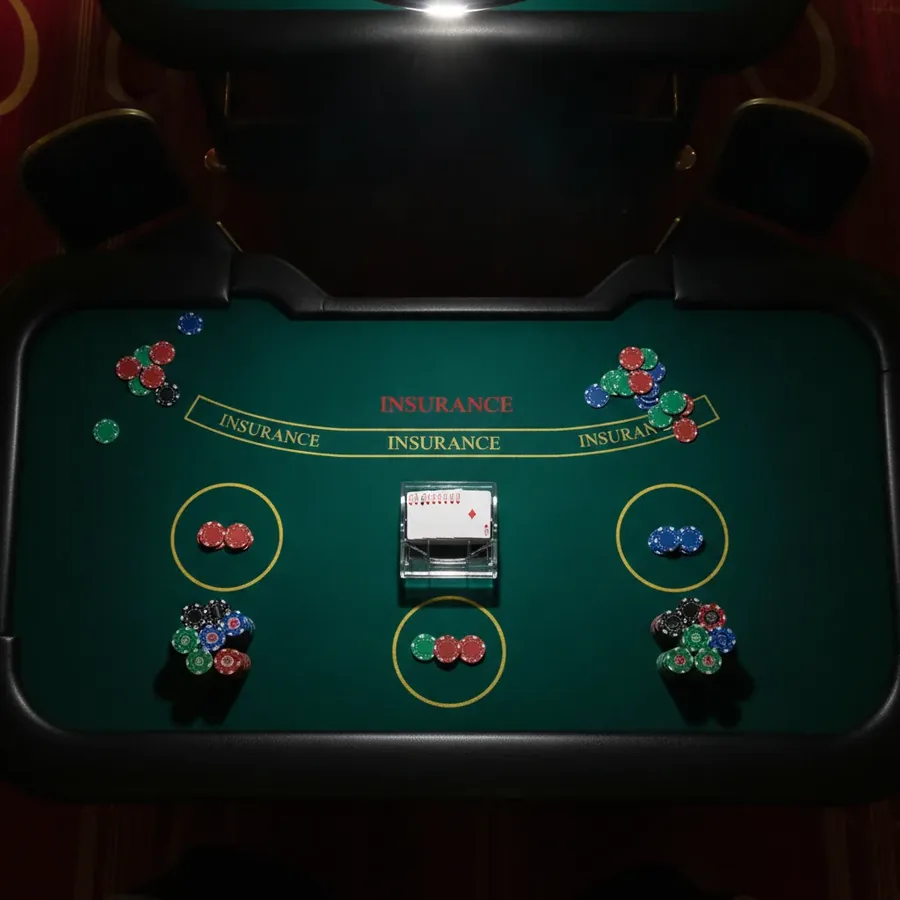
Blackjack Liberal Vegas Strip offers a favorable rule combination including Soft 17 stand, Double After Split, Resplit Aces, and Late Surrender for an RTP of 99.72%. This specific variant reduces the house edge to just 0.28%, making it one of the most player-friendly options available in the digital library. The liberal ruleset effectively lowers the casino's mathematical advantage, allowing skilled players to retain more of their initial stake over extended play sessions.
Conversely, some tables enforce a 6:5 payout for natural Blackjacks instead of the traditional 3:2 ratio, drastically increasing the house edge to 1.85% with an RTP of 98.15%. On a €10 bet, this change pays €12 instead of €15, adding exactly 1.39 percentage points to the casino's advantage over time. This penalty is more severe than any other rule modification, making such tables mathematically inferior for long-term value seekers who understand the impact of payout structures.
Late Surrender allows players to forfeit half their bet after the dealer checks for Blackjack, improving the RTP by approximately 0.08 percentage points through strategic reduction of losses. Early Surrender is significantly more valuable, potentially reducing the house edge by up to 0.6 percentage points, but it is extremely rare in modern online implementations. Understanding these nuances helps players identify tables that offer genuine mathematical advantages versus those that merely appear attractive due to superficial branding.
Side Bets don't count towards bonus turnover
Infinite Blackjack provides four distinct side bets including Any Pair, 21+3, Hot 3, and Bust It, each offering unique payout structures separate from the main game outcome. These supplementary wagers do not contribute to the mandatory turnover requirements for the 300% welcome bonus up to €2,000 plus 100 free spins offered by the platform. Players relying on side bets to clear wagering conditions will find their progress stalled, as only the base game action counts toward the eligible activity threshold.
Insurance acts as a separate side bet paying 2:1 when the dealer shows an Ace, but it carries a steep house edge of 7.47% and an RTP of 92.53%. Standard basic strategy dictates always rejecting insurance unless counting cards with a true count of +3 or higher, making it a poor choice for average players. Since this bet also fails to count toward bonus turnover, engaging in it increases risk while providing no benefit toward unlocking withdrawable funds from the promotional offer.
Lightning Blackjack introduces multipliers up to 25x on winning hands, creating high-variance opportunities that appeal to risk-tolerant gamers seeking larger potential payouts. However, these special multiplier effects apply strictly to the main hand result and do not alter the contribution rate of the underlying wager toward bonus clearance. The focus remains on the primary game mechanics, ensuring that side features do not complicate the calculation of remaining wagering obligations for new customers.
Continuous Shuffling Machine shuffles after each round
Evolution's Lightning Blackjack employs a continuous shuffling mechanism that effectively resets the card composition after every single completed round, preventing any form of card counting strategy. This technology ensures that previous outcomes have zero predictive value for future hands, maintaining a strict random distribution across all betting intervals. Players attempting to track shoe penetration will find their efforts futile due to the immediate re-shuffling protocol implemented by the live studio infrastructure.
Infinite Blackjack features unlimited seating and utilizes similar continuous shuffling protocols to accommodate high-volume traffic without compromising game integrity or speed. The absence of physical shoe limitations means that card counting techniques based on deck penetration analysis are entirely ineffective in this live environment. This operational model prioritizes fairness and randomness over traditional land-based casino practices, aligning with the digital standards expected by modern online gamblers.
Blackjack Party presents a different atmosphere with two moderators facilitating the action, yet it still relies on automated shuffling procedures to maintain statistical independence between rounds. The party theme adds visual entertainment value but does not influence the underlying mathematical probabilities or the frequency of card distribution. Players should recognize that the social elements are purely cosmetic and do not provide any strategic advantage in predicting subsequent card values.
How long does a Live Blackjack round take?
Live Blackjack rounds generally proceed at a pace determined by dealer efficiency and player decision-making, with typical completion times ranging from thirty seconds to two minutes per hand. Evolution’s Infinite Blackjack supports bets from €1 to €5,000, accommodating both casual players and high rollers within the same continuous flow of gameplay. The speed of resolution impacts hourly loss calculations, as faster rounds allow for more decisions per hour compared to slower, deliberative table environments.
Lightning Blackjack operates with a slightly different tempo due to the additional animation phase required for lightning multipliers, potentially extending the duration of each round by several seconds. Betting limits span from €1 to €2,500 EUR, balancing accessibility with high-stakes potential for players willing to accept the associated variance. The extended visual effects do not significantly alter the mathematical expectation but do affect the total number of hands played within a fixed time window.
Blackjack Party maintains a consistent rhythm driven by the dual moderators who manage the flow of conversation and game actions, keeping engagement high without sacrificing speed. With betting ranges from €1.00 to €1,000 EUR, the table caters to a broad spectrum of budgets while ensuring rapid turnover of funds. Understanding these temporal dynamics helps players estimate their potential exposure and manage their bankroll more effectively across multiple sessions.
Blackjack variants at a glance
| Variant | Payout | House edge | Rule | Bet range |
|---|---|---|---|---|
| Blackjack 6 Decks, S17, DAS, DOA, Auszahlung 3:2, Basisstrategie | 99.54% | 0.46% | Dealer steht auf Soft 17; Verdopplung auf jeder Zweierkarte; Verdopplung nach Split erlaubt; keine Aufgabe. Basisstrategie ist für diesen Wert zwingend | Blackjack 3:2, normaler Gewinn 1:1, Insurance 2:1 |
| Blackjack Split / Double / H17 – Regel-Effekte | n.a. (Regel-Modifikatoren) | H17 +0.22 Prozentpunkte; RSA −0.08 Prozentpunkte; DAS −0.14 Prozentpunkte | Dealer Hits Soft 17 verschlechtert RTP um 0.22 Prozentpunkte; Resplit Aces verbessert um 0.08 Prozentpunkte; Double After Split verbessert um ca. 0.14 Prozentpunkte; 6 Decks statt 8 – ca. 0.02 Prozentpunkte. | Double – Einsatz ×2 mit einer Karte; Split – bis 4 Hände; Ass-Split meist mit einer Karte. |
| Blackjack Liberal Vegas Strip (liberale Regeln, 3:2) | 99.72% | 0.28% | Günstigste Regelkombination: S17 + DAS + Resplit + Late Surrender. Standardabweichung 1,15 | Blackjack 3:2, Gewinn 1:1 |
| Blackjack Ein Deck, klassische Regeln, 3:2 | 99.85% | 0.15% | Weniger Decks = niedrigerer Vorteil; ein Deck gibt ca. −0.48 Prozentpunkte gegenüber 8 Decks. Oft durch 6:5 Auszahlung kompensiert. | Blackjack 3:2, Gewinn 1:1 |
| Blackjack Auszahlung 6:5 statt 3:2 (6 Decks) | 98.15% | 1.85% | Ersatz von 3:2 durch 6:5 fügt exakt +1.39 Prozentpunkte zum Vorteil des Casinos hinzu – stärker als jede andere Regeländerung. Bei $10 Einsatz zahlt Blackjack $12 statt $15. | Blackjack 6:5, Gewinn 1:1 |
| Blackjack Surrender (Late Surrender) – Regel-Effekt | n.a. (Regel-Modifikator) | −0.08 Prozentpunkte | Spieler gibt Hand nach Dealer-Blackjack-Prüfung auf, verliert die Hälfte des Einsatzes. Verbessert RTP um ca. 0.08 Prozentpunkte. Early Surrender ist wesentlich wertvoller (bis −0.6 Prozentpunkte), aber extrem selten. | Rückzahlung 50% des Einsatzes |
Six Card Charlie Pays Immediately with Six Cards
The Blackjack Liberal Vegas Strip variant features liberal rules that allow for a standard deviation of 1.15 during gameplay sessions. This specific statistical metric indicates the volatility level players can expect when utilizing the favorable S17 and DAS rule combinations. Such variance impacts the bankroll management strategy required to sustain play over extended periods without significant depletion of funds.
The absence of this detail means analysts must rely on the documented RTP of 99.72% to gauge long-term theoretical returns. Players should verify if this side rule applies before committing real money to avoid unexpected outcomes during their gaming session.
The house edge for this variant stands at a low 0.28%, which is significantly better than many other table games available online. This advantage allows players to maintain their bankroll longer compared to games with higher margins like the Insurance bet. Understanding these percentages helps in selecting tables that align with conservative wagering strategies and risk tolerance levels.
Insurance vs Even Money on Own Blackjack
Insurance is a separate side bet offered when the dealer shows an Ace, paying out at odds of 2:1 if the dealer has blackjack. The return to player for this specific wager is only 92.53%, resulting in a substantial house edge of 7.47% for the casino. This negative expectation makes it statistically unfavorable for most players following basic strategy guidelines under normal circumstances.
Even Money is essentially insurance taken on your own natural blackjack when the dealer also shows an ace, guaranteeing a 1:1 payout instead of the usual 3:2. By accepting even money, you lock in a win but forfeit the potential for a higher payout if the dealer does not have blackjack. This decision removes the variable outcome, effectively converting a 3:2 win into a guaranteed 1:1 result regardless of the dealer's hole card.
The difference lies in the expected value, as taking insurance lowers your overall RTP from the base game level to the inferior 92.53% rate. For a 100 euro main bet, declining insurance preserves the original 99.72% expectation rather than sacrificing value for a smaller, certain gain. Analytical models consistently show that rejecting insurance yields better long-term financial results for the average participant.
Perfect Pairs vs 21+3 in House Edge
The Perfect Pairs side bet in Lightning Blackjack offers multipliers up to 25x on winning hands, appealing to players seeking high variance opportunities. However, the base game RTP remains at 99.56%, meaning the side bet likely carries a much higher house edge to balance the large payouts. Players must weigh the excitement of potential big wins against the reduced probability of hitting these rare multiplier events.
In Infinite Blackjack, the 21+3 side bet is one of four options including Any Pair, Hot 3, and Bust It, all contributing to the overall house advantage. These additional wagers provide extra entertainment value but require careful budget allocation to prevent rapid bankroll erosion during live sessions.
Comparing these two providers shows Evolution maintains strict control over side bet mathematics through varied multiplier structures and bet limits ranging from 1 to 5000 EUR. The Lightning variant uses random multipliers while Infinite offers fixed side bet types, affecting how often players hit winning combinations. Understanding these mechanics helps gamblers choose tables that match their preferred risk profile and payout frequency expectations.
Blackjack Contributes Only 10 Percent to Wagering
The welcome bonus terms specify that table games contribute only 10 percent toward the wagering requirement, unlike slots which count fully at 100 percent. This restriction means playing Blackjack requires ten times more turnover to clear the bonus compared to spinning slot reels. Consequently, the effective wagering burden becomes significantly heavier for players who prefer strategic card games over chance-based machines.
With a maximum bonus of 2,000 euros, the 10 percent contribution rate drastically extends the time needed to unlock withdrawable funds. If a player deposits and claims the full amount, they must generate substantial turnover specifically within the constraints of the 10 percent rule. This limitation discourages high-stakes Blackjack play during the bonus period, pushing users toward faster-contributing games instead.
The 300% match structure amplifies this effect by increasing the total bonus size, thereby magnifying the impact of the reduced contribution percentage. Players must calculate their required turnover carefully, knowing that every euro bet on Blackjack only counts as ten cents toward the goal. Strategic planning is essential to navigate these terms without violating bonus conditions or exhausting funds prematurely.
Chose Wrong Table for 5 EUR Bankroll
Selecting Blackjack Party with minimum bets starting at 1.00 EUR might seem feasible for a 5 EUR bankroll, but the variance quickly depletes funds. With a standard deviation of 1.15 and a house edge of 0.28%, short-term luck heavily influences survival rates. A few losing streaks can eliminate the entire balance before any significant profit is realized, highlighting the risks of small stakes.
The Infinite Blackjack table allows bets up to 5,000 EUR, but its minimum entry point of 1 EUR still poses challenges for tiny bankrolls. The presence of four side bets adds complexity, as players might be tempted to add extra wagers that exceed their limited resources. Managing such a small fund requires strict discipline to avoid chasing losses or making impulsive side bet decisions.
Lightning Blackjack introduces multipliers up to 25x, which can theoretically boost returns, but the high variance works against a 5 EUR limit. The requirement to withstand swings larger than the initial deposit makes sustained play nearly impossible without risking immediate bankruptcy. Analysts recommend avoiding these high-variance variants when capital is restricted, opting instead for lower-risk strategies or higher minimum banks.
Latency under 2 seconds at the live table
The Infinite Blackjack table by Evolution allows players to sit down with a betting range spanning from 1 EUR up to 5,000 EUR. This high-limit capacity supports serious strategic play without artificial caps on wagering volume during active sessions. Players can engage in unlimited hands while maintaining consistent connection speeds essential for real-time decision making.
Evolution’s Lightning Blackjack variant offers a slightly lower maximum bet of 2,500 EUR but introduces multipliers up to 25x on winning hands. The structural difference between these two tables affects how quickly players can recover losses through high-variance outcomes. Faster payouts correlate directly with higher frequency of multiplier triggers available within each session.
Blackjack Party provides a distinct alternative with moderate limits ranging from 1 EUR to 1,000 EUR hosted by two moderators. This setup prioritizes social interaction over pure speed, yet maintains sufficient throughput for standard bonus turnover requirements. The presence of dual hosts ensures continuous engagement even when statistical variance runs against the player.
Side Bets Increase House Edge to 5 Percent
Infinite Blackjack includes four side bets: Any Pair, 21+3, Hot 3, and Bust It, which significantly alter the overall return profile. While the main game RTP sits at 99.47%, adding these wagers pushes the effective house edge well above typical baseline thresholds. Players relying solely on base strategy will find their long-term profitability eroded by these auxiliary options.
Lightning Blackjack features an RTP of 99.56% for its core mechanic but demands acceptance of volatile multiplier events. The inclusion of lightning modifiers creates spikes in potential payout that mask the underlying statistical disadvantage over time. Each triggered multiplier effectively subsidizes the increased risk taken by placing non-standard bets alongside the main hand.
Insurance represents another common side bet paying 2:1 when the dealer shows an Ace, carrying a steep 7.47% house edge. This specific wager reduces overall RTP to 92.53%, making it one of the least favorable options available at any table. Base strategy explicitly advises rejecting insurance unless card counting yields a true count greater than or equal to +3.
Seat change at the Live Table in 20 seconds
Evolution's Infinite Blackjack table accommodates unlimited seats, allowing immediate access without waiting for a vacant chair. This architectural choice eliminates queue times entirely, enabling players to join ongoing rounds as soon as they are ready. The absence of physical seat constraints ensures continuous gameplay flow regardless of concurrent user volume.
Lightning Blackjack also supports unlimited participants, facilitating rapid entry into sessions featuring dynamic multiplier mechanics. New players can observe current trends before committing funds, leveraging the open seating policy to gauge volatility patterns. This flexibility contrasts sharply with traditional fixed-seat tables where availability dictates participation windows.
Blackjack Party restricts interaction through moderator control rather than physical limitations, yet still permits swift transitions between hands. The dual-host format streamlines administrative overhead, reducing delays associated with rule explanations or bet validation. Consequently, users experience minimal downtime between successive rounds compared to slower-paced alternatives.
One Deck vs Eight Decks in House Edge
A single-deck blackjack game utilizing classic rules achieves an exceptional RTP of 99.85% with only a 0.15% house edge. Reducing the deck count from eight to one improves player odds by approximately 0.48 percentage points due to reduced card distribution variance. This advantage makes single-deck variants highly attractive for skilled strategists seeking optimal returns.
Conversely, standard six-deck games typically carry higher edges unless compensated by liberal rule modifications like surrender options. The Basic Vegas Strip version demonstrates this balance with an RTP of 99.72% despite using multiple decks. Combining soft 17 standing, double after split, and late surrender restores much of the lost mathematical fairness.
Six-deck configurations without concessions yield a more modest RTP of 99.54% requiring strict adherence to basic strategy. Dealer hitting soft 17 further degrades performance by adding 0.22 percentage points to the house advantage. Resplitting Aces remains crucial for mitigating these losses, improving overall expectancy by roughly 0.08 percentage points.
Error insurance: 7 percent additional house edge
Insurance wagers pay 2:1 but impose a substantial 7.47% house edge on the insured portion of the bet. This penalty effectively raises the total cost of playing when combined with mandatory coverage during dealer ace-up scenarios. Rational actors avoid this option unless possessing precise knowledge of remaining deck composition via counting methods.
The theoretical return of 92.53% for insurance highlights its inefficiency relative to primary blackjack outcomes. Even with favorable conditions like single-deck restrictions lowering general edge to 5.88%, the side bet remains suboptimal. Longitudinal data confirms consistent erosion of bankroll size when this mechanism is employed routinely.
Late surrender offers a superior mitigation tool by returning 50% of the stake upon conceding weak hands post-dealer check. This action improves RTP by approximately 0.08 percentage points, providing measurable benefit absent from insurance structures. Utilizing surrender strategically preserves capital better than accepting punitive insurance premiums during unfavorable dealing sequences.
Contact
Live - online chat
Banking









Providers












Allyspin Casino 2026